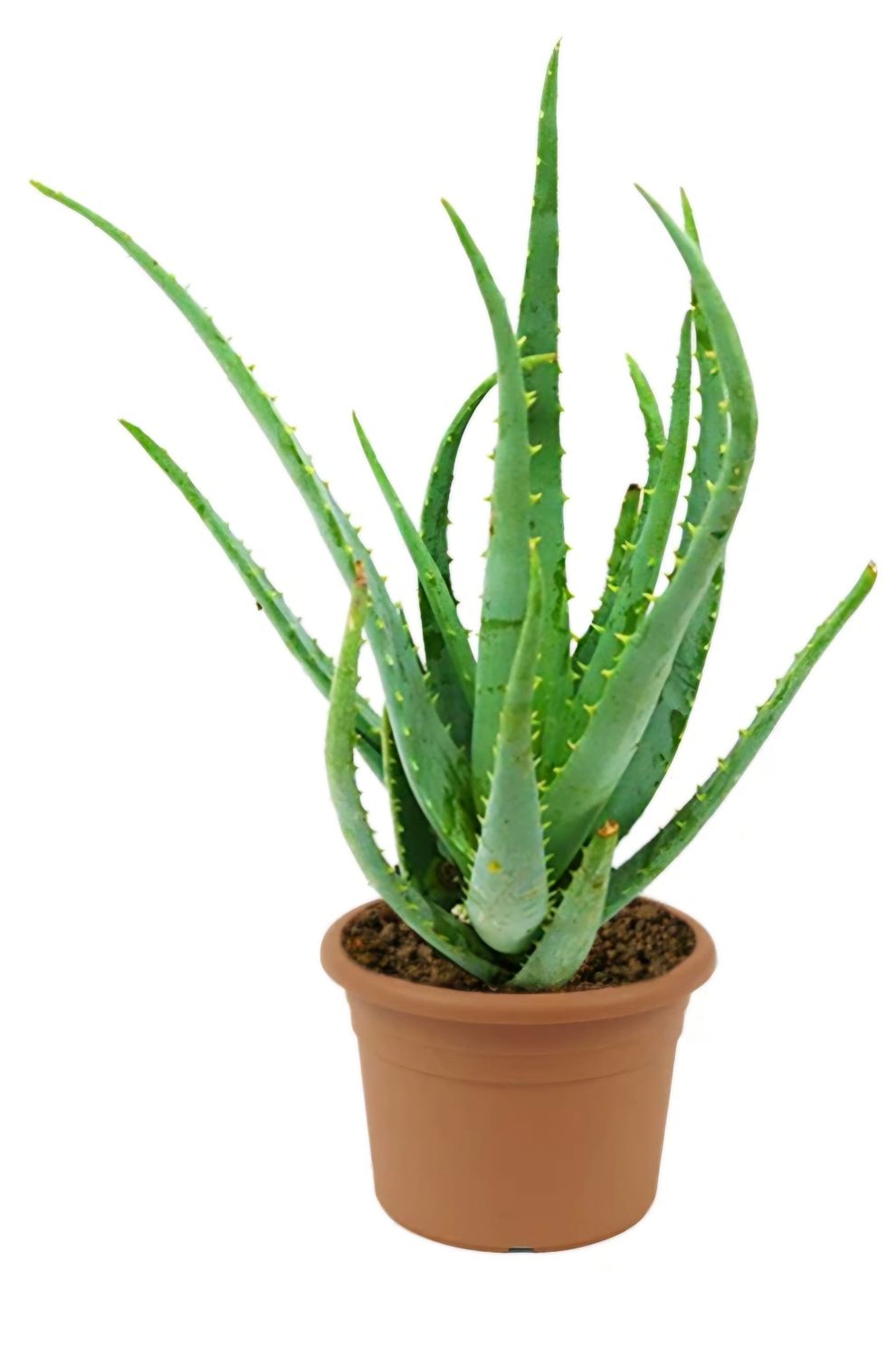
Aloe Vera
AED12.00
Height
In stock
1
Product Details
Aloe Vera (also known as Medicinal Aloe, True Aloe, or Aloe barbadensis miller), is one of the most popular and recognizable succulents worldwide. This hardy, rosette-forming plant features thick, fleshy, lance-shaped leaves that are bright green to gray-green, often with small white speckles or spots, and edged with tiny serrated teeth. Native to the Arabian Peninsula, it grows compactly indoors (typically 1–2 feet tall and wide) in a classic rosette shape, making it ideal for windowsills, kitchen counters, bathrooms, or as part of a succulent collection. When happy, it produces tall flower spikes with tubular yellow or orange blooms in summer (though flowering is less common indoors).
People love Aloe Vera for its legendary medicinal properties — the clear gel inside the leaves has been used for thousands of years to soothe sunburns, minor cuts, burns, skin irritations, and even as a natural moisturizer. It's a true "first-aid plant" that feels practical and empowering to have on hand. Beyond its healing reputation, it's incredibly low-maintenance, thrives on neglect, purifies indoor air by removing toxins like formaldehyde and benzene, propagates easily from pups, and adds a fresh, sculptural touch to any space with its architectural form. It's beginner-friendly, pet-safe in small amounts (though ingestion can cause mild upset), and symbolizes healing, protection, and good luck in many cultures.
Caring Tips for Aloe Vera
Light: Bright, direct to indirect sunlight is best (4–6+ hours daily); a south- or west-facing window is perfect. It tolerates lower light but grows leggy and produces fewer pups; too much intense sun can scorch leaves.
Watering: Water deeply but infrequently — only when the soil is completely dry (every 2–4 weeks, less in winter). It's extremely drought-tolerant; over watering is the main cause of rot. Always use pots with drainage holes and empty excess water from saucers.
Soil & Pot: Use a well-draining cactus/succulent potting mix (or add sand/perlite to standard soil). Terracotta pots are ideal as they wick away moisture and prevent soggy roots.
Temperature & Humidity: Thrives at 13–27°C. Low humidity is fine - no misting needed.
Fertilizing: Feed lightly with a balanced or succulent fertilizer diluted to half strength once or twice in spring/summer. Skip during fall/winter dormancy.
Pruning & Maintenance: Remove dead or damaged outer leaves at the base. Harvest gel by cutting a mature leaf close to the base, slicing it open, and scooping out the clear gel (avoid the yellow latex near the skin, which can be irritating).
Propagation: Easy from offsets ("pups") that grow at the base — separate when they're a few inches tall and pot them up.
Common Issues: Soft, mushy leaves from over watering/poor drainage; shriveled leaves from under watering (recoverable); brown tips from low humidity, fluoride in water, or cold damage.
Note: The gel is generally safe topically, but ingestion (especially the yellow sap) can cause digestive upset in pets and humans - keep out of reach of curious pets and children.
With its unbeatable combo of beauty, simplicity, and real-world usefulness, Aloe Vera is the ultimate must-have houseplant - a living remedy that's as practical as it is pretty!
Save this product for later
Aloe Vera
You May Also Like
Display prices in:AED